Today marks two weeks since Maine resident Johan Sebatian Guerrero’s life was snatched away from him by an ICE agent who, by the Border Czar Tom Homan’s own words, may not have been properly vetted. No shit, man!
It seems like most of the people hired by ICE tend to be problematic, if not literally the bottom-feeders of humanity. Since, if they had any decency, they probably would have bounced by now. I mean, there’s a point that even needing money should matter less than our moral compass and given that these agents are essentially well-funded bounty hunters carrying out the regime’s ethnic cleansing plan—yeah, they aren’t good people.
Two weeks since a three-year-old little girl lost her father, a wife lost her husband, and the world lost a light. In the immediate hours and days after Johan’s death, Biddeford, Maine was in the national and international spotlight as the country grappled with yet another attempted ICE kidnapping turned to murder.
As I wrote previously, I am very familiar with Biddeford; I lived across the river in Saco for years. We still have a family house there, where my ex-husband lives. I worked in Biddeford for years before taking my current position. Hell, my hair stylist is in Biddeford. I am in Biddeford regularly. It is truly a community I see as home. In the immediate hours after the killing, hundreds of us (including myself) gathered at Mechanic Park to hold space for what had just happened hours earlier.
For the rest of that first week, Biddeford was swarmed with activity as national social justice influencers such as Jolly Ginger, USM Angry Veteran, and others landed in Maine to bear witness, show the world what was happening on the ground, and assist local activists and organizers. From what I have heard from local organizers, many felt that national attention and aid was useful—at least in the immediate aftermath—with assisting Johan’s family and others directly impacted by this tragedy. Maine was abuzz with activity as vigils and protests happened across the state.
Last week, I spent several days in the Biddeford area and had a chance to pay my respects at the site of Johan’s murder, where the community had created a beautiful memorial to honor his memory. When I arrived at the memorial site, there was a local chaplain present who recognized me from my work and shared that a group of clergy were holding vigil at the memorial site around the clock to ensure that nothing happened to it. He also shared that community clergy would be holding vigils throughout the month of August for the community to process this tragedy. Sweetser, one of our largest mental health providers in Maine, is also working with the city of Biddeford to provide counseling to those struggling in the aftermath of this senseless tragedy.
In the immediate hours and days after the killing, Biddeford saw hundreds of people in the streets demanding justice for Johan. By the end of the week, Biddeford saw well over a thousand people turn out for a Friday afternoon event to speak out on this tragedy. A week later, though, the local Biddeford-Saco group that has been protesting the administration’s injustices for over a year now—and that organized the vigil and protest for Johan—saw around 50 people turn out. While that is still a slightly larger group than their usual weekly protest, that’s a big drop really fast, and it is clear that as the administration continues its kidnapping and murder spree across the country, people are returning to normal. However, those who were already doing the work in their communities are continuing that work even when the attention has moved on. Sure, for many people, that initial outrage has subsided and life goes on, but life is not back to normal here and won’t be for a long time. Same for similarly assaulted communities over the past year-and-half.
It really hit me a few days ago, when I was having a late breakfast in Biddeford at a nationally known diner that is a tourist destination and surrounded by tourists, just how deeply siloed our lives have become in this country. Less than two minutes away from the site of a very recent federal execution but no one was talking about it. After living in Maine for almost 25 years now, I know it is a tourist destination and that tourists want to enjoy their vacations. At the same time, I have never traveled anywhere and not been knowledgeable on some level of the local flavor and happenings while in that location. Yet in today’s world, a young man can lose his life unjustly and while it can make the national news and be in the news cycle for several days, the reality is that for too many Americans it’s just another bad thing and we still have to live our lives. Or do we?
This morning as I was doing my morning doomscrolling on Instagram, I came across a reel from an activist, Lavish Mac, who has been a part of aid trips to Cuba, whose work focuses on collective liberation. Mac was lamenting how people are just living life while all these bad things are happening around us.
As an ole-head in the world of activism and organizing whose organizing career started in the 1990s, and who has spent the last 12 years full time in movement spaces, I understand his frustration and I also know that if people don’t make space for living, it can take a horrible toll. Even the most dedicated organizers will burn out. Our activism must be integrated into our lives and when we expect people to stay at full speed all the time, it doesn’t work.
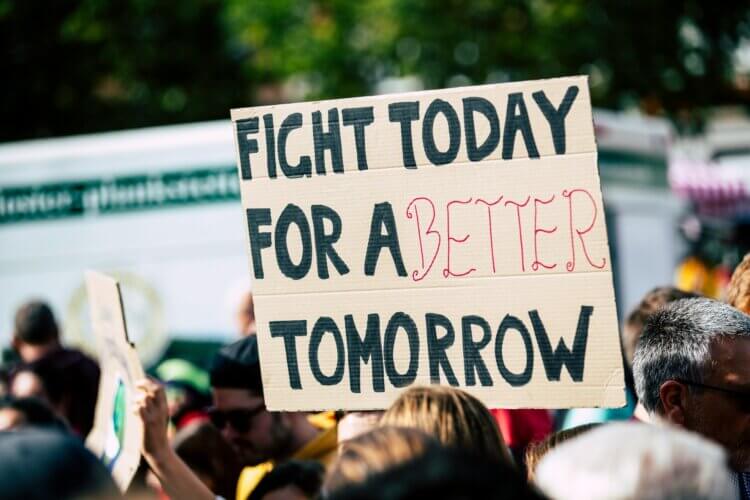
In fact, one of the challenges I see in today’s organizing sphere is the lack of bringing people in at a level they where can be consistent in maintaining it. Also, too few (and too infrequent) actions that make a real bottom-line impact on comfort and/or economics. Yes, there is visual power in keeping people in the streets but is it really effective if there is no disruption or asks on the part of the protesters?
A true protest is about disruption until the desired goals of the protest are met.
One of the greatest actions in modern-day history was the bus boycotts in Montgomery Alabama. That lasted 381 days, it financially broke the bus company, and the result was the bus company had to de-segregate their buses. For 381 days, Black Americans chose to not ride those buses, instead carpooling or walking miles in many cases to avoid those buses. Suffice to say, it was extremely inconvenient and uncomfortable, especially when local officials started harassing boycott leaders and carpool drivers. Still, they held their ground.
Part of why today’s protests aren’t getting quite the desired effects is that for starters how many attendees are willing to risk discomfort or arrest? Have people created bail funds and plans for those who are willing to take higher levels of risks—even in Maine and other locales where protests are happening outside of ICE facilities and resources are scarcer? What is the ask beyond “close them down” and has anyone thought about actual measured concrete tasks beyond standing outside and chanting or creating petitions? I don’t want to piss in anyone’s Cheerios but I don’t think asking nicely with 5,000 signatures is going to push people to the desired goal.
A large part of organizing is building together and that isn’t going to happen in a way that is distilled down for a Reel or TikTok video. In fact, if I am being honest, I am cautious about “organizing” with anyone who feels the need to share the work on social media. Given the era of McCarthyism 2.0 that we are living in, not everything can happen online nor should it. A group of activists in Texas are looking at 30- to 70-year sentences for mostly bullshit; we might want to put some thought into what’s happening.
It is disheartening to see people not engage in what is happening but at the same time are we creating accessibility in bringing people into the work? While we do a great job of raising funds to assist victims in the aftermath of tragedies, why is it virtually impossible to fund the work of skilled and trained organizers? I recently had to let go of a skilled organizer at my day job due to a lack of funds—an organizer with a decade of solid specialized experience across the region. We are literally hanging on with hope and prayer as are many other grassroots organizations who often have well-trained staff but are in the same boat in terms of financial struggle. Many groups and organizers that were active in the era of Black Lives Matter have moved on from the work and the top reasons tend to come down to burnout, lack of support, and lack of money.
Let’s not even talk about how the nonprofit-industrial complex pits us against each other when it comes to funding the work and effectively prevents us from creating stronger coalitions. ICE activity disproportionately directly impacts BIPOC and immigrant communities and at the same time, community organizing (especially in a state like Maine) isn’t the sole purview of BIPOC and immigrant folks. In Maine, we make up 8% of the total population but if we can’t access resources to bring in trained and skilled white organizers, what are we even doing? Not every white person is well-resourced and pretending that’s the case is to avoid reality.
The thing is that losing trained and experienced organizers impacts us right now and hobbles our ability to be effective in the future too. We need active and funded folks who know how to plug people in using their skills in the best ways. Who understand that true organizing is multi-layered and builds as we grow our trust. It also involves knowing that organizing is not one size fits all. Organizing like what we saw in Minneapolis isn’t necessarily going to work in Maine.
Yes, Minnesota and Maine are both pretty white places but Minneapolis has significantly larger communities of color, as well as a lot of skilled and trained organizers who are plugged in nationally to support networks. Remember, George Floyd was killed in Minnesota, they already had a local organizing community before his murder and it only grew in the aftermath. Thus, when ICE arrived in Minneapolis earlier this year, there were organizers at the ready who actually knew each other and had built some trust. They weren’t just connecting for the first time on a Signal thread that could be infiltrated. Maine is also an extremely rural and poor state overall, where many people may not have the ability or means to show up. How are we bringing those folks in? Especially during the tourist season when a lot of folks are hustling now to provide for themselves and prepare for the winter when the income drops off or disappears entirely.
Organizing must match the community. As someone who got their start in a very large city, I know that what works in Chicago has to be adjusted for Maine.
The thing is that until organizers and activists get ourselves on the same page, how do we expect to bring in others? Especially when we are doing this work in a culture that wants our attention. It isn’t pejorative to say that we have the attention spans of gnats because that is our new reality; I see it all the time. So, we need to start with ourselves and be honest.
While it can be disheartening to see people just living life in the midst of fascism, the fact is that our work cannot solely be reactionary and rage-based. We have to hold hope and touch joy; otherwise, knowing that we may not see the wins in our lifetime means we may lose the will to stay in the work. The key is balance. What joyful things can we do and enjoy while engaged in the work? Maybe we take Sundays off to break bread, throw back a few, and sing together knowing we will be back on the ground in a few days.
We want this nightmare to be over, but the uncomfortable truth is we are up against people who had a huge head start in planning this moment. It’s deeper than the administration or even the Heritage Foundation; the roots of this moment really go back to the Reagan years and even before that. To go deeper, check out Hajar Yazdiha’s The Struggle for the People’s King.
We need to look to the people of Hungary and others who have faced authoritarian rule to guide us in our efforts. Part of organizing is strategy for the moment and after a year and a half of protests, it is clear that as the surveillance dragnet tightens around us, our efforts require a higher level of mindfulness and strategic planning.
The dust may be settling in Maine, but like every other city and state that has been touched by the violence of this administration, the work goes on and we need to plan for what that work will look like given the conditions in our state. It is caring for the mental and emotional needs of those struggling in the aftermath as well as broadening our coalitions to bring more people to the table as we plan for the next time—all toward ensuring that we can eventually see an end to this mayhem being inflicted upon us by our own government.
PS: As an independent writer, as much as l love your comments and sharing, your financial support is what keeps my writing viable. Become a Substack subscribertoday, or if you are interested in my more deeper and personal writing with an anti racism lens, become a Patreon patron. Or if you just want to show your gratitude for this piece, consider Buying Me a Coffee.
Image by Markus Spiske, obtained via Unsplash